

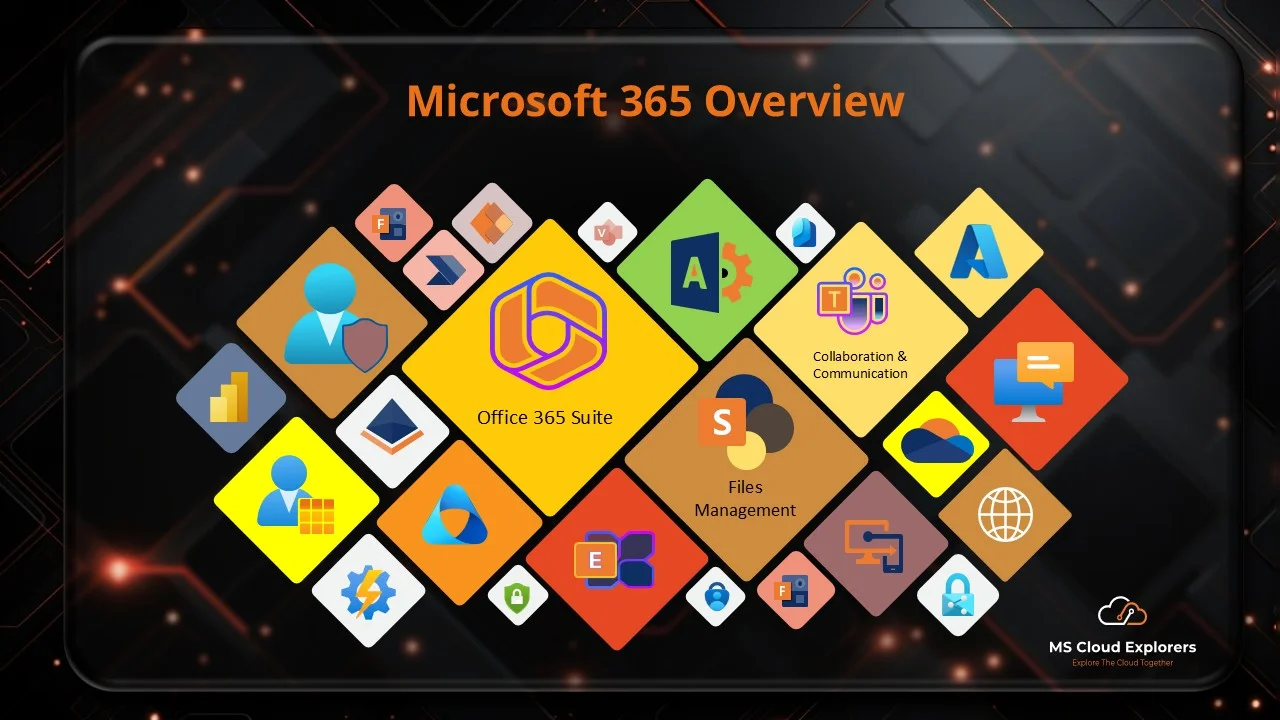
If you’re planning to move to Microsoft 365 and feeling confused about its features, applications, or subscription plans—and unsure which option is best for your organization—you’re in the right place.
Microsoft 365 is more than just office suite, and email system. It is a powerful cloud productivity and security ecosystem designed to improve collaboration, protect business data, and streamline IT operations when implemented correctly.
With 7+ years of experience as a Microsoft 365 Engineer, I have successfully delivered Microsoft 365 migrations involving thousands of mailboxes and terabytes of data, all with minimal downtime and maximum business continuity.
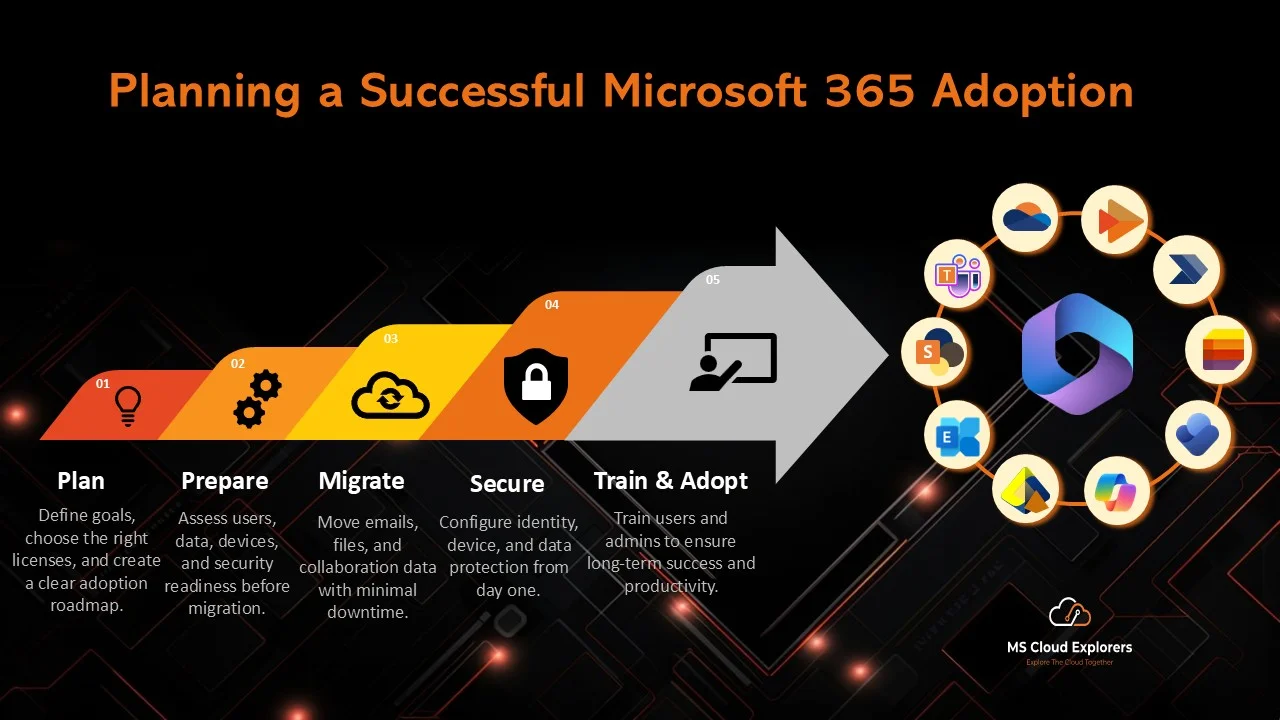
In my previous blog on Microsoft 365 Adoption, I explained how to choose the right Microsoft 365 subscription based on organizational needs, along with proven migration strategies and best practices.
In this blog, I’ll focus specifically on Microsoft 365 applications—what each app does, how it works, and how you can use it effectively in your environment.
This guide is designed for IT administrators, decision-makers, and end users who want to fully utilize Microsoft 365 through proper app usage, end-user training, and admin-level planning.
Let’s dive in.
Core Architecture of Microsoft 365
Microsoft 365 is a Software-as-a-Service (SaaS) platform, licensed on a per-user, per-month or yearly basis.
It delivers built-in productivity, security, and identity services through the cloud, with centralized administration and minimal infrastructure maintenance. IT teams primarily manage users, devices, security, and compliance, while Microsoft handles backend maintenance.
Depending on your license, Microsoft 365 also includes endpoint management and advanced security controls.
At its core, Microsoft 365 provides:
- Cloud-hosted productivity applications
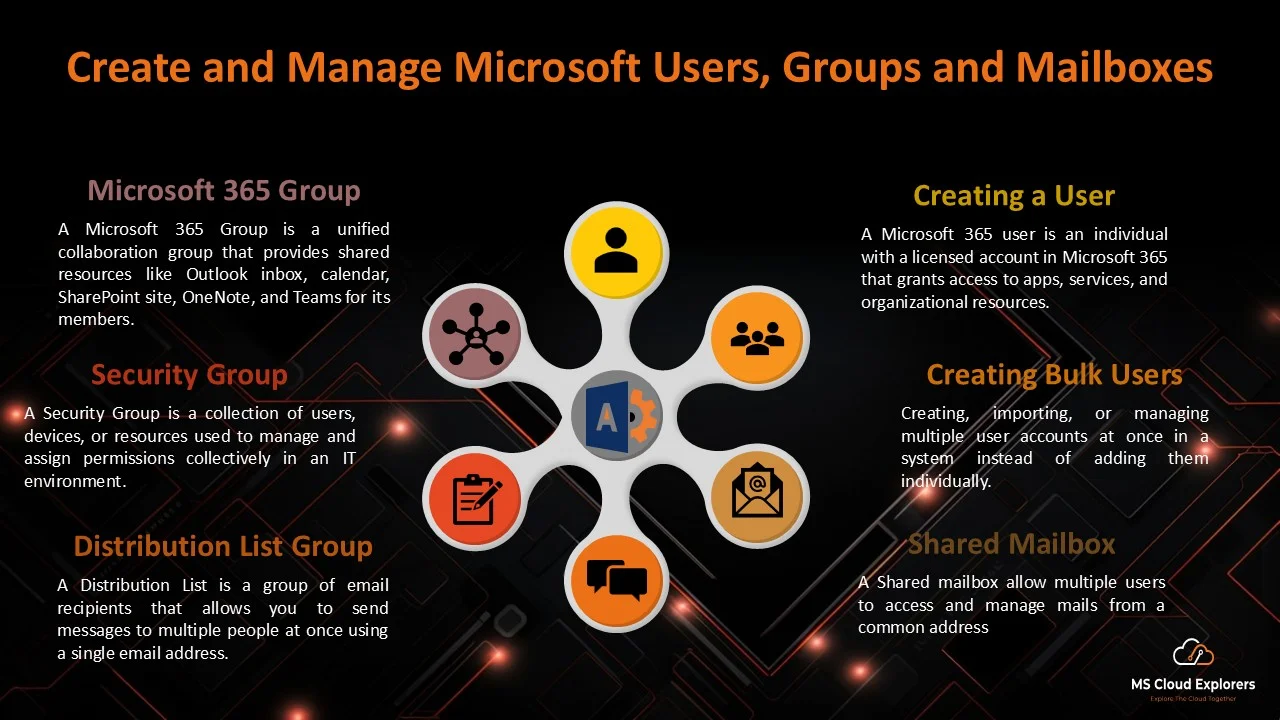
- Identity and access management
- Endpoint and application management
- Built-in security and compliance tooling
This architecture enables centralized control while allowing distributed teams to collaborate securely from anywhere.
Productivity Applications That Power Modern Collaboration

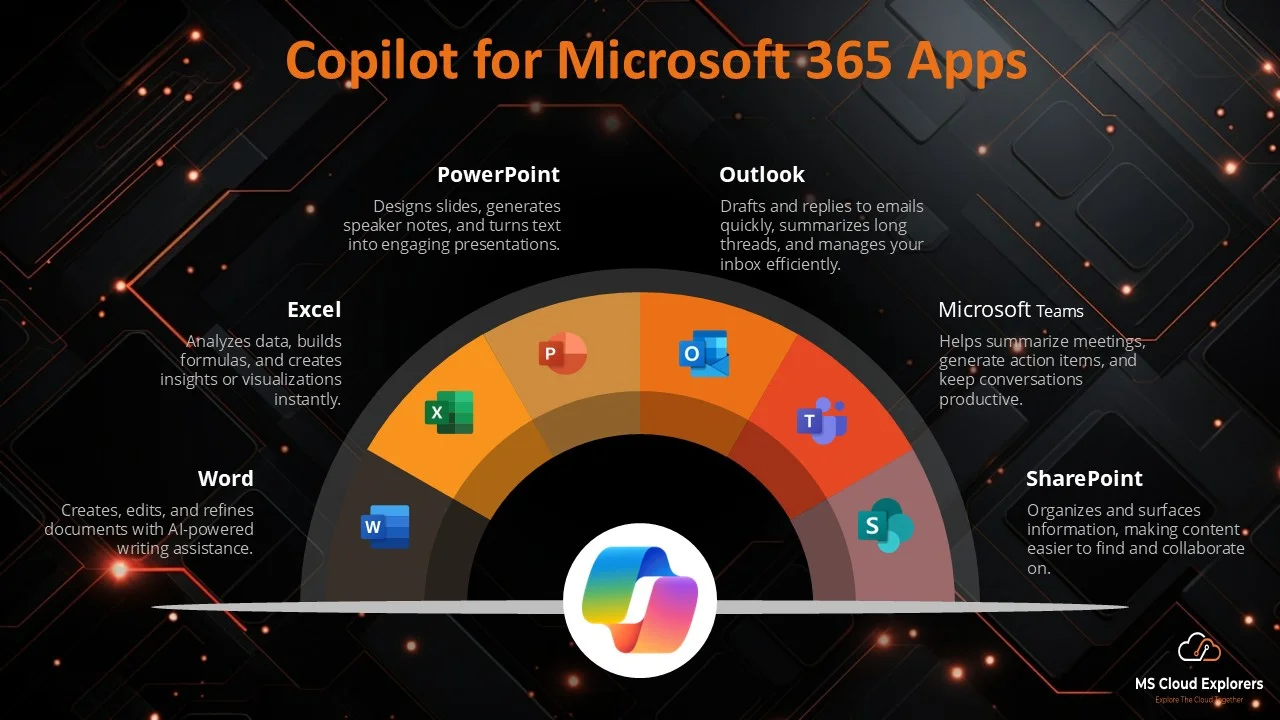
- Microsoft Word – Create, edit, and collaborate on professional documents using web and desktop apps. Access files from any device, use built-in templates, and leverage Copilot for AI-powered writing assistance.
- Microsoft Excel – Analyze data using formulas, PivotTables, and advanced visualizations. Automate workflows with Power Query, VBA, and AI-driven insights to support smarter business decisions.
- Microsoft PowerPoint – Design impactful presentations with professional templates, animations, and multimedia. Collaborate in real time and enhance slides using AI-powered design suggestions.
- Microsoft OneNote – Gather ideas, notes, and multimedia materials in one spot. Notes sync automatically across devices, ensuring information is always accessible.
- Microsoft Outlook – A single platform for tasks, contacts, calendar, and email. Features like Focused Inbox, smart scheduling, and deep Microsoft 365 integration improve communication efficiency. Outlook is available on desktop, mobile apps, and the web.
Collaboration and Communication Tools
- Microsoft Teams – Microsoft Teams provides secure chat, audio and video meetings, and file collaboration in a single workspace. It integrates seamlessly with Microsoft 365 apps and supports PSTN calling, IVR, and Office Phone System integration.
- Microsoft SharePoint – SharePoint is the modern replacement for legacy file servers. It provides a centralized document repository with real-time collaboration, versioning, external sharing, and workflow automation. Users can sync document libraries directly to their computers.
- Viva Engage – Viva Engage helps employees connect, share knowledge, and build internal communities—strengthening company culture and engagement.
- Skype – Skype provides legacy chat and calling features. While largely replaced by Teams, it may still be used in limited scenarios.
Data Management and Business Intelligence
- Microsoft Access – Create and manage relational databases with minimal coding. Build customized database applications for specific business needs.
- Power BI – Transform data into interactive dashboards and reports. Use AI-powered analytics and Copilot to uncover insights and support data-driven decision-making.
- Microsoft Lists – Track and manage information using customizable lists. Lists integrate with SharePoint and Microsoft Teams for seamless collaboration.
Task Management and Workflow Automation
- Microsoft Planner – Organize team tasks using visual boards and charts. Assign tasks, monitor development, and work together in real time.
- Microsoft To Do – Manage personal tasks, reminders, and daily priorities. Tasks sync with Outlook for a unified task management experience.
- Power Automate – Automate repetitive workflows across Microsoft 365 and third-party apps using low-code automation. Hundreds of free templates are available and can be customized to fit business needs.
Low-Code Apps and Digital Solutions
- Power Apps – Create customized business apps using minimal or no coding. Use templates, connect data sources, and deploy secure apps across devices.
- Power Pages – Create secure, low-code business websites with data integration, authentication, and Copilot-powered features.
- Microsoft Loop – Enable real-time co-creation using flexible Loop components that stay synchronized across Teams, Outlook, and Word.
Scheduling, Forms, and Productivity Tools
- Microsoft Bookings – Simplify appointment scheduling with customers and partners. Calendars sync automatically with Outlook and Teams, similar to Calendly.
- Microsoft Calendar – Manage and share schedules across devices with real-time updates through Outlook and Teams.
- Microsoft Forms – Create surveys, quizzes, and polls quickly using built-in templates. Collect and analyze responses in real time.
Learning, Insights, and Employee Experience
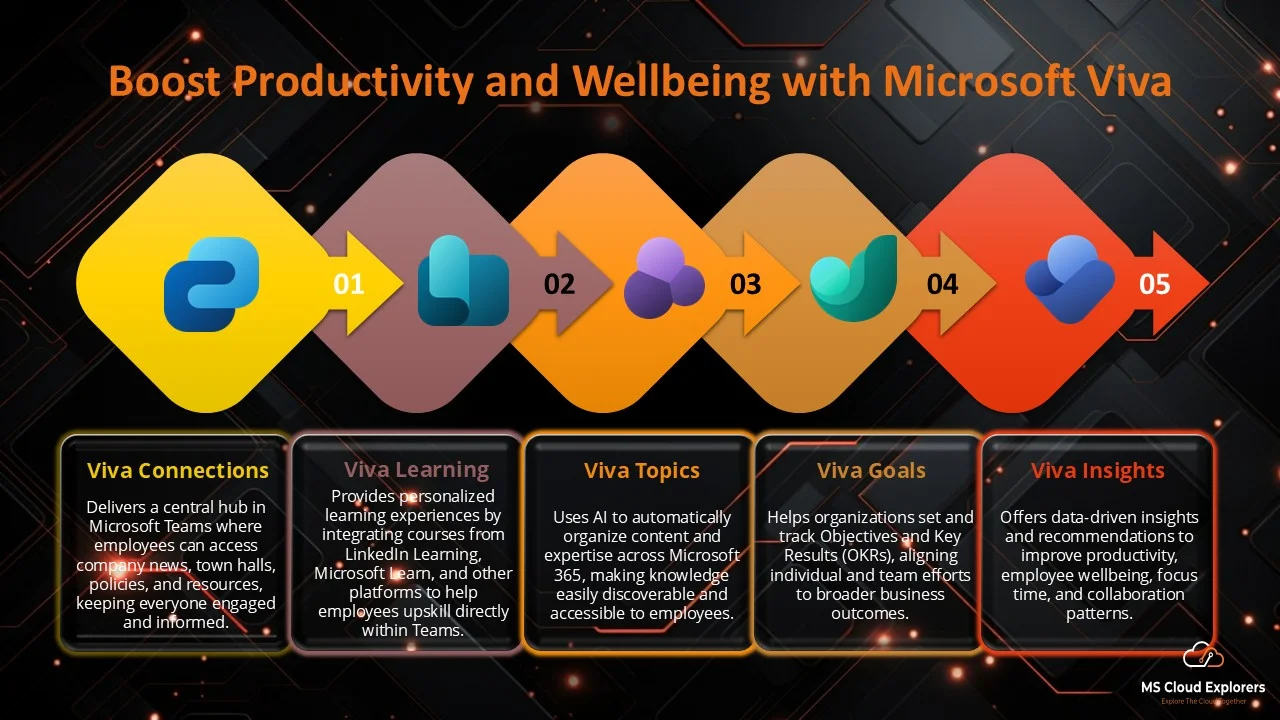
- Viva Insights (MyAnalytics) – Provides AI-powered insights into work habits and collaboration patterns, helping improve productivity and employee wellbeing.
- Viva Learning – Centralizes learning content from Microsoft and third-party providers directly within Microsoft Teams.
Creative, Visual, and Content Tools
- Microsoft Sway – Create interactive, responsive presentations and digital storytelling content—ideal for sales, marketing, newsletters, and company updates.
- Microsoft Visio – Visualize complex information using diagrams, flowcharts, network diagrams, and organizational charts.
- Microsoft Whiteboard – A collaborative digital canvas for brainstorming and ideation, enabling real-time collaboration from anywhere.
Video and Media Streaming
- Microsoft Stream – Securely share training videos and recorded meetings. Organize video content and control access across the organization.
Identity and Access Management with Microsoft Entra
Microsoft Entra is the identity security perimeter of Microsoft 365. It provides centralized authentication and authorization with:
- Single Sign-On (SSO)
- Conditional Access
- Multi-Factor Authentication (MFA)
- Role-Based Access Control (RBAC)
- Privileged Identity Management (PIM)
Microsoft Entra ID is available in Free, Premium P1, and Premium P2 plans. On-premises Active Directory can be integrated using Entra ID Connect.
Endpoint and Device Management with Microsoft Intune
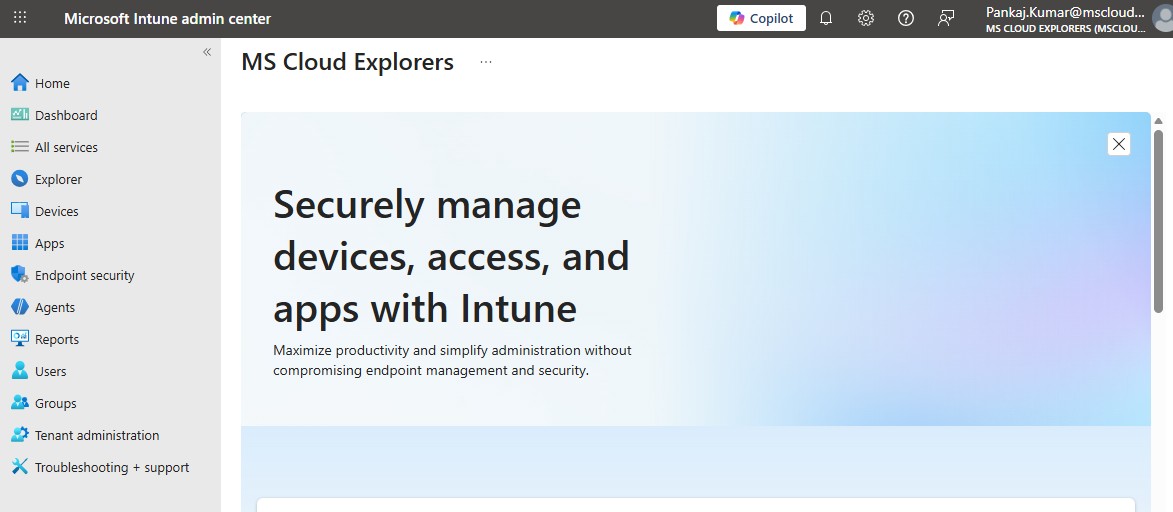
Microsoft Intune enables unified endpoint management across Windows, macOS, iOS, and Android. Key features include:
- Device compliance policies
- Application deployment and updates
- Mobile Application Management (MAM)
- Conditional Access integration
Intune is included in Microsoft 365 Business Premium and Enterprise E3, with add-on options available. In our previous blog we have explained how you can Implement and enroll your devices to the Microsoft Intune.
Built-In Security, Compliance, and Data Protection
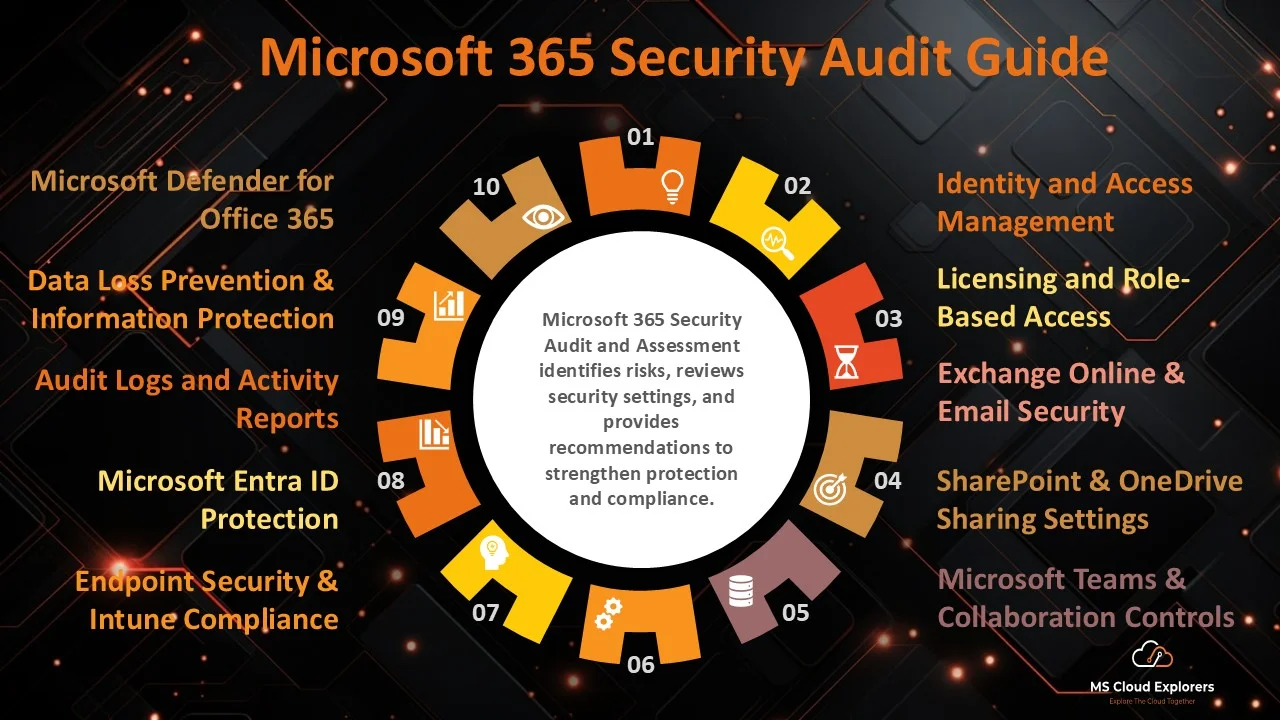
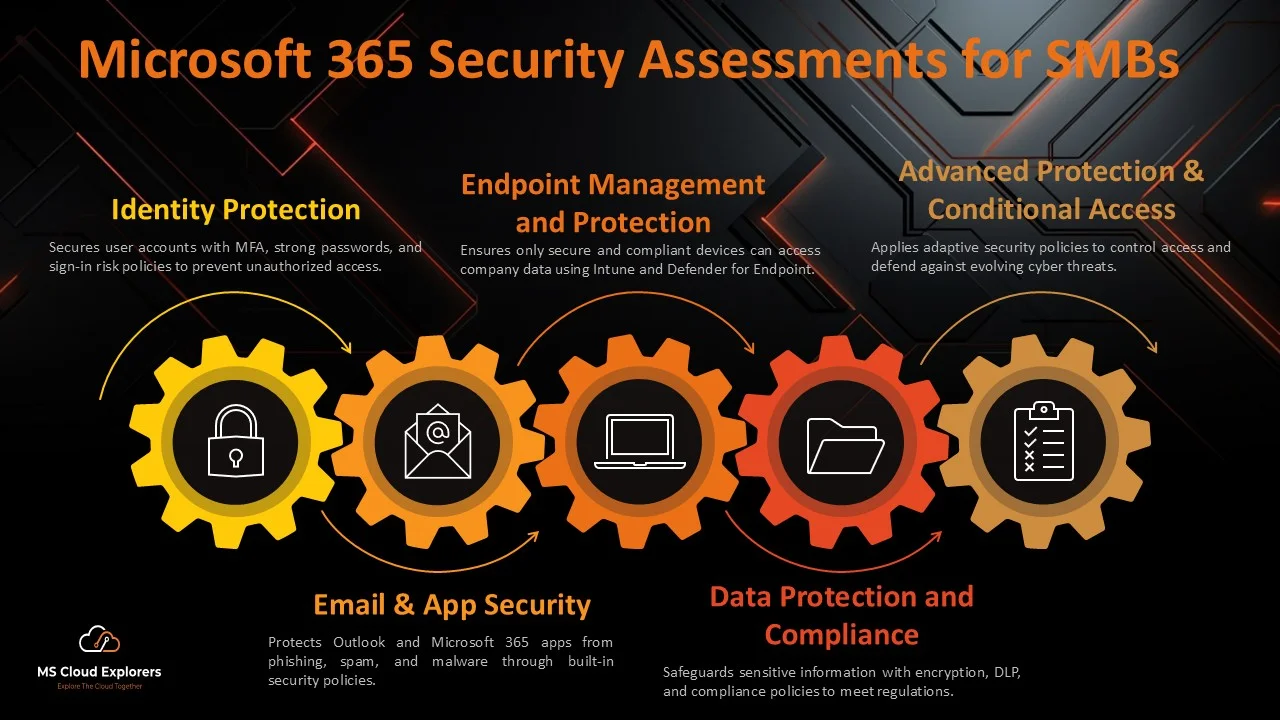
Microsoft 365 provides layered security across identity, email, endpoints, and data, including:
- Threat protection
- Endpoint Detection and Response (EDR)
- Sensitivity labels
- Data Loss Prevention (DLP)
- Retention policies, eDiscovery, and audit logging
Advanced features are available in Business Premium, E3, E5, or via add-on licenses. We have covered all of these topics on Security and Compliance blogs you can check-out for step-by-step configuration.
Microsoft 365 Licensing and Plans Explained
Microsoft 365 offers flexible licensing options:
- Business plans for SMBs
- Enterprise plans (E3, E5) for advanced security and compliance
- Frontline plans for shift workers
- Add-on security and compliance SKUs
Choosing the right license ensures cost efficiency and access to required capabilities.
Microsoft 365 Best Practices
To maximize security and value:
- Enforce least-privilege access
- Enable MFA for all users
- Use Conditional Access policies
- Review privileged roles regularly
- Automate compliance and retention
FAQs
What separates Microsoft 365 from Office 365?
Microsoft 365 includes Office apps plus Windows, security, and device management.
Can Microsoft 365 work on mobile devices?
Yes, it fully supports iOS and Android.
Can Microsoft 365 licenses be upgraded or downgraded?
Yes, plans can be adjusted as business needs change.
Is Microsoft 365 secure for sensitive business data?
Yes, Microsoft uses encryption, zero-trust security, and global compliance standards.
Where can I buy Microsoft 365 licenses?
Licenses can be purchased directly from Microsoft or through authorized Microsoft resellers, often at discounted pricing with additional support benefits.
2 comments on “Microsoft 365 Applications Explained: A Complete Guide for IT Admins and Businesses”